

Who Makes Antler Chandeliers? How to Choose a Maker
Independent artisans and specialty workshops build chandeliers from real antlers. Reproduction manufacturers make fixtures from molded resin, while dealers and marketplaces may sell either kind. Before you order, ask who built the fixture, what it is made from, and who can answer questions about your specific design.
Who makes our antler chandeliers?
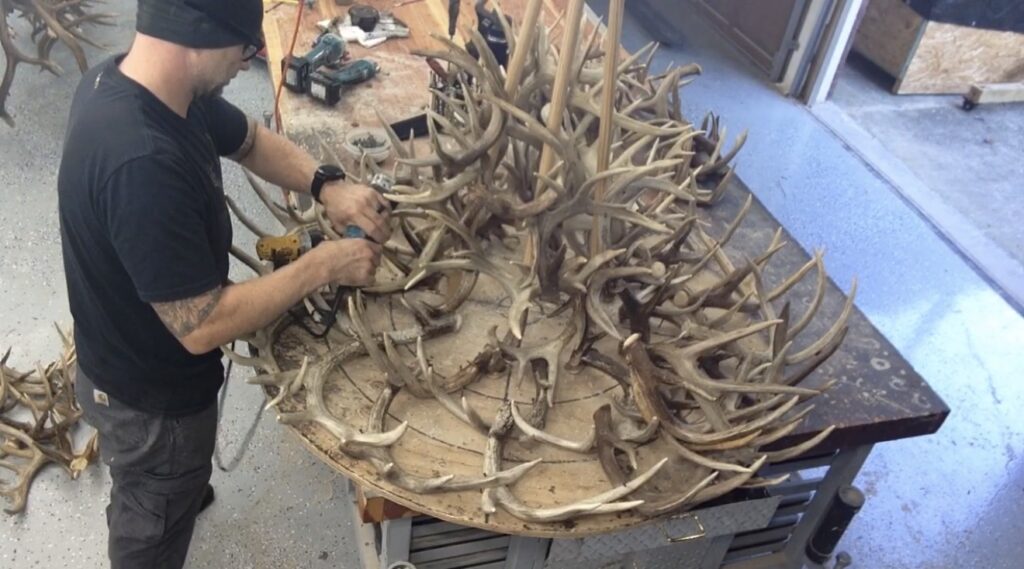
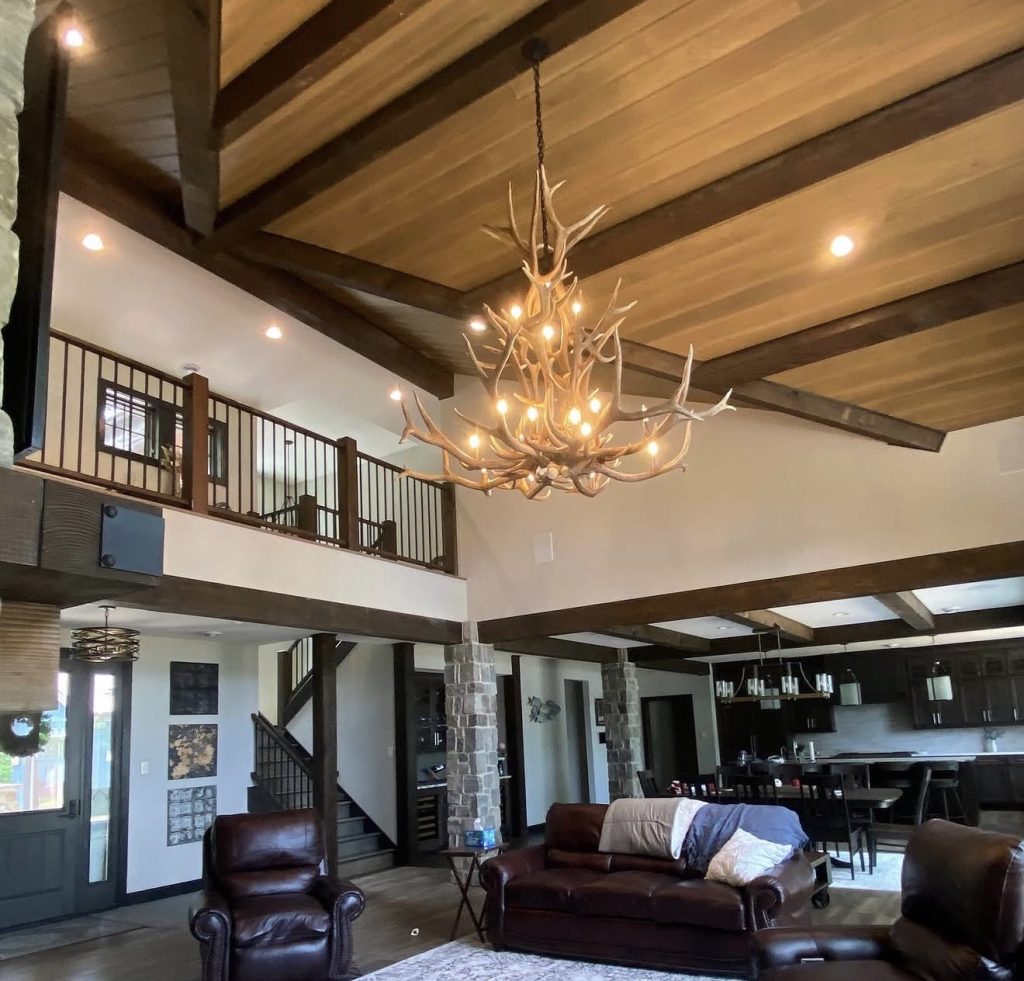
Dante Martin, our owner and master builder, has been making antler lighting for more than 20 years. He is the single builder behind every UL-listed piece we make. Every antler is naturally shed, ethically sourced, and hand-selected by Dante.
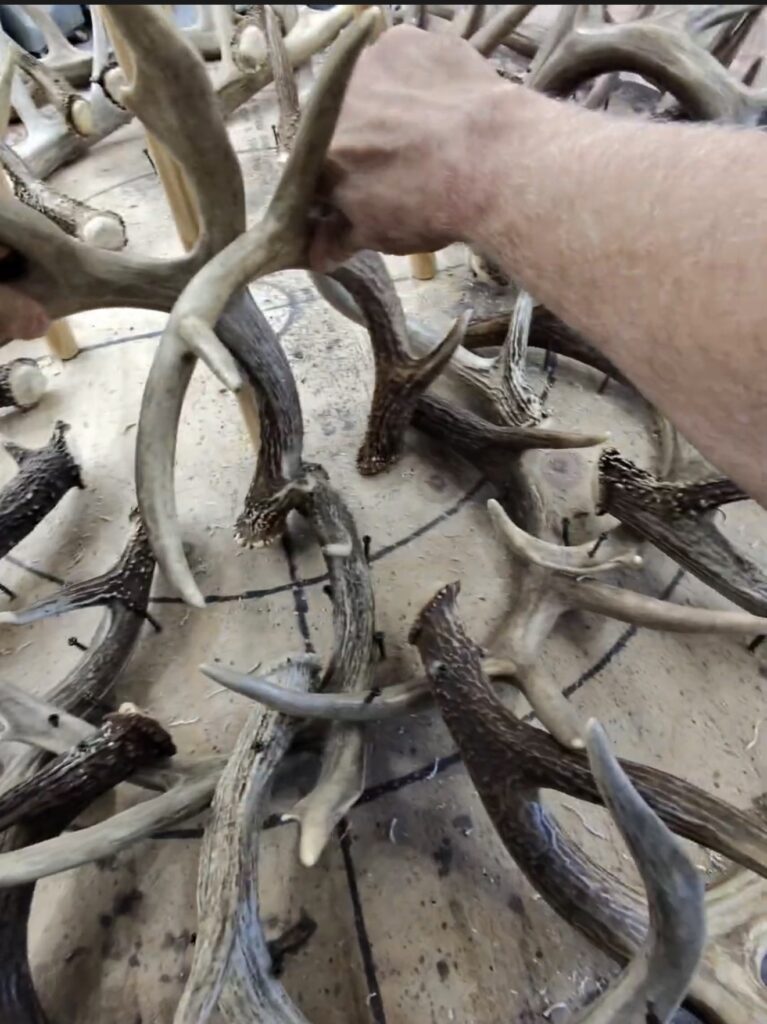
At the bench, he selects and fits antlers one at a time. He checks how the tines sit next to each other and how the whole fixture will look from below, where you will usually see it.
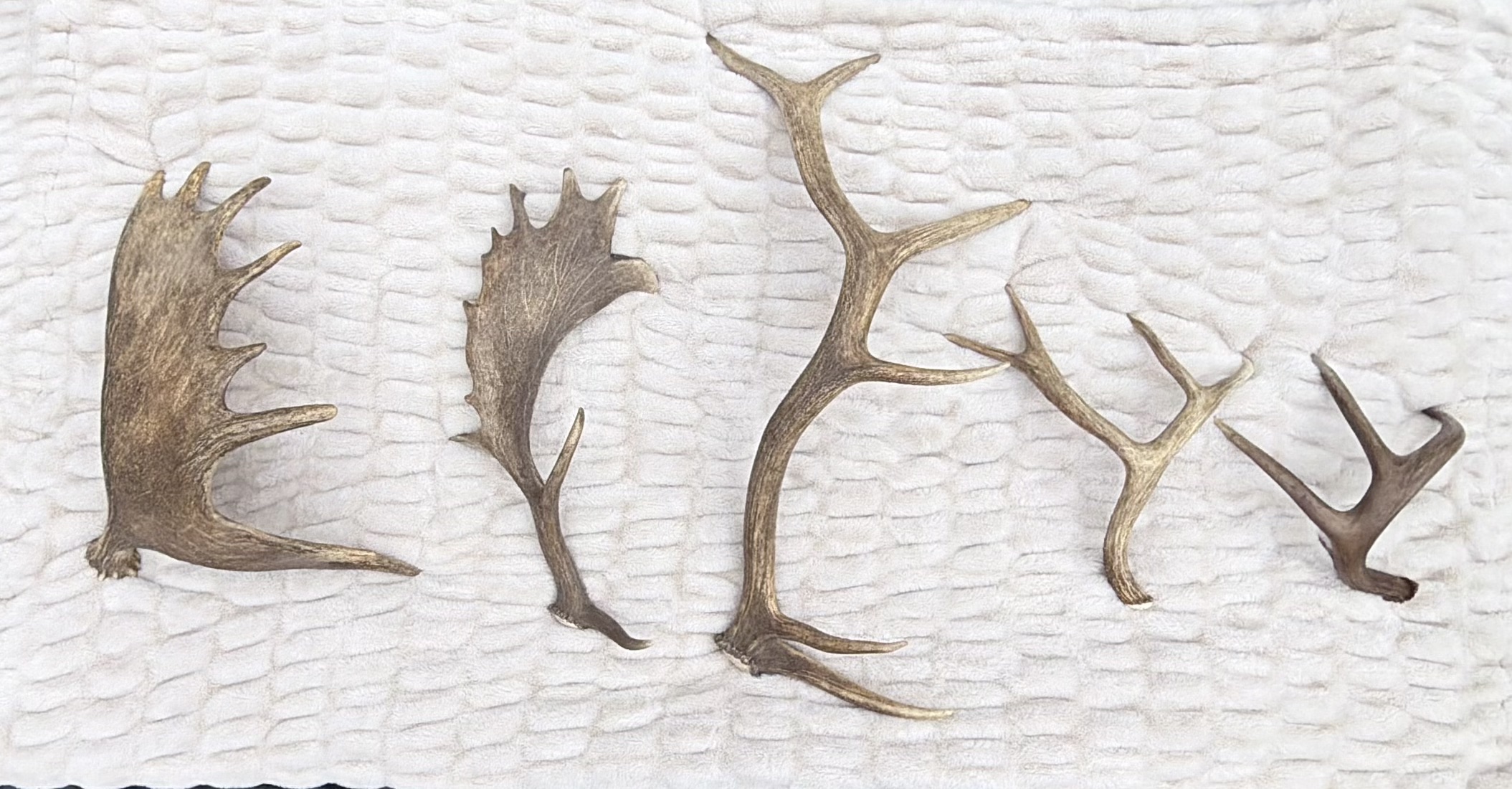
Each antler has a different curve, thickness, and reach. On a tiered design, moving one antler can open a gap, obscure a light, or change the outline of a whole layer. Once the arrangement works, the antlers are fitted and drilled for the wiring, and the worked areas are patched and finished to blend with the surrounding antler.
The work behind three whitetail designs
The figures below are workshop estimates. Antler counts and bench time vary with the individual fixture.
| Fixture | Antlers used | Approx. bench time, including custom crating |
|---|---|---|
| Two Tier Whitetail | About 18 | 24 hours |
| 6 Tier Whitetail | About 70 | 54 hours |
| XL 6 Tier Whitetail | 80–90 | 64 hours |
On a six-tier build, Dante works with roughly 70 distinct antlers. Their curves determine how the layers fit together and where the light can sit. The times above include building the fixture and making its custom crate. Your quoted build window also accounts for the shop schedule, so ask for the current window when you order. Freight transit is separate.
See every design in our whitetail antler chandeliers collection, or compare species in our antler species guide.
Who actually makes antler chandeliers?
The seller may be the maker, or it may sell a fixture built elsewhere. Knowing which arrangement you are dealing with helps you ask the right person about dimensions, custom options, and support after delivery.
Independent makers. A small workshop may let you speak directly with the artisan who will fit the antlers. This is especially useful if you want to change the proportions, use a particular antler, or review the layout as the chandelier takes shape. Ask which steps the named builder handles and who will answer your questions during the build.
Team workshops. A designer and several builders may share the work. Ask who leads your build, who approves the finished fixture, and who handles any design changes. A team can be a good fit for a project that needs several coordinating fixtures or has a tight installation schedule. Ask what the shop can commit to for your specific order.
Importers and private-label brands. A brand can commission a fixture from a separate factory and sell it under its own name. Ask where the fixture is made, who can confirm its dimensions and materials, and whether the seller can provide the finished fixture’s listing information and replacement parts.
Reproduction manufacturers. These companies make fixtures from molded materials such as resin. A reproduction can suit a project that calls for repeated shapes or a more uniform finish. Ask for the material, finished weight, and listing details for the particular model.
Dealers, galleries, and marketplaces. These sellers can be good sources for vintage or one-of-a-kind work. Ask for the original maker, available documentation, and a clear explanation of who can answer installation questions or supply replacement parts.
How to spot real antler in a listing
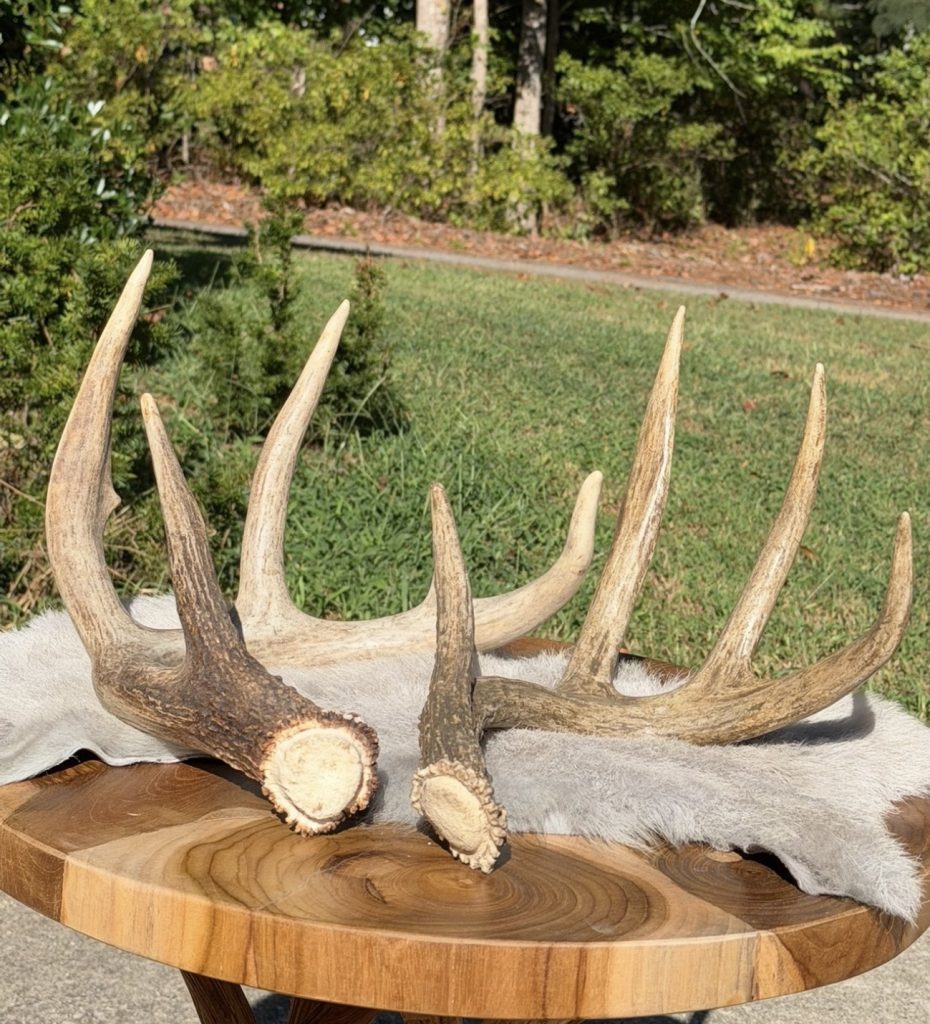
Zoom in on two or three antlers on the same fixture. Real antlers vary in the way the tines branch, in surface texture, and in color even within one piece. Repeated shapes or visible mold seams are clues that a fixture may use cast parts. Photos are a starting point. Ask the seller to identify the material in writing, including accents such as socket covers.
On our fixtures, every antler is real. The standard socket covers at each light are resin, and real antler socket covers are available as an upgrade.
For close-up examples, see our Real vs. Faux Antler Chandelier Guide.
Does the listing cover the finished fixture?
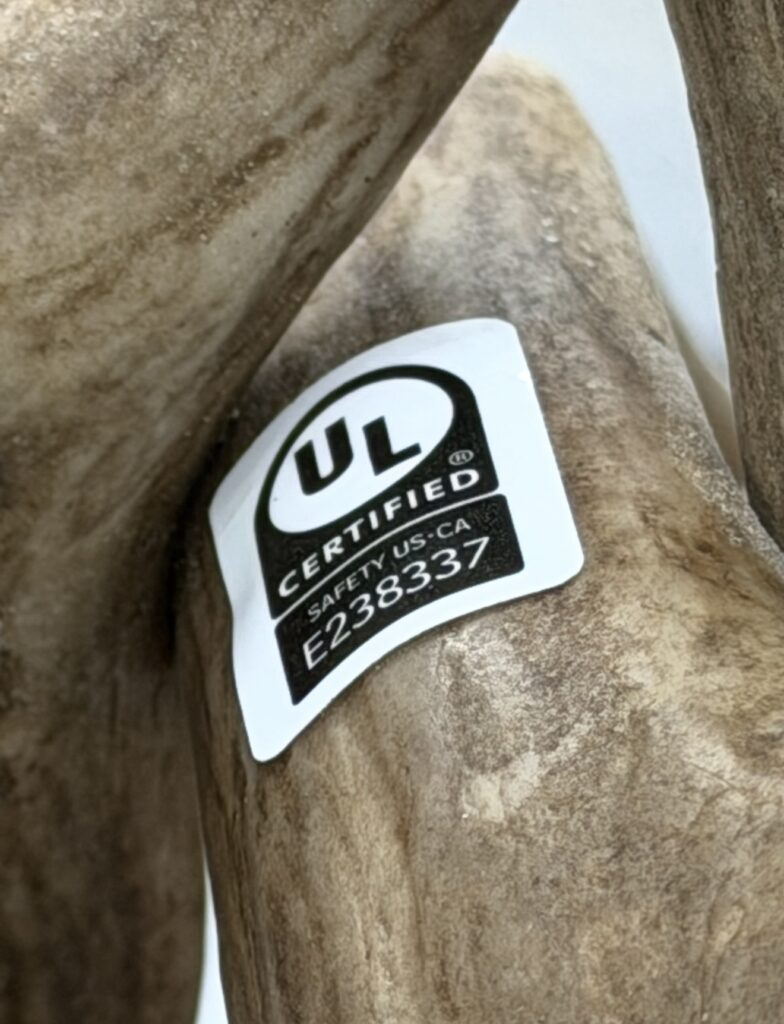
Ask whether the complete chandelier is listed and request the listing file number. A listing for an individual socket or wire covers that component. The finished fixture has its own construction details, including how wiring runs through the fixture and how parts are secured.
For a UL listing, ask for a photo of the fixture label or look up the file number in UL Product iQ. Check that the listing applies to the fixture you plan to buy. Our UL Listed Antler Chandeliers Guide explains the difference between a finished-fixture listing and component markings.
What if you are ordering a custom chandelier?
Get written confirmation for the specific configuration before placing a deposit. A different span, a mixed-species build, or a chandelier made with antlers you supply can raise questions that a catalog model’s listing information alone does not answer. If an electrician, designer, or project team is involved, share the fixture documentation while the project is still being planned. Our commercial and hospitality lighting guide covers what a project team needs, and designers, architects and contractors can apply for our trade program.
Our chandeliers, pendants, and sconces are UL Listed as finished fixtures for the United States and Canada under File E238337. That listing covers our custom builds too, including chandeliers Dante builds from antlers you send us through Use Your Antlers. Our table and floor lamps fall outside that listing.
Eight questions to ask before you order
- Which parts are real antler, and are any parts resin?
- Is the finished fixture listed? What is the listing file number?
- Does the listing cover the specific configuration I want to order?
- Who will build my fixture, and who checks the finished work?
- What is the estimated fixture weight, and what should my installer plan for?
- What is the build window, and how could a design change affect it?
- What photos or drawings will I see before the fixture ships?
- Who can help with installation documentation or replacement parts?
Share the fixture weight and our Antler Chandelier Installation Guide with your installer while you are planning the project.
Frequently asked questions
Who makes antler chandeliers?
Antler chandeliers are made by independent builders, small team workshops, production manufacturers that also cast resin reproductions, and overseas factories that supply importers and private-label brands. Many retailers and marketplaces sell fixtures they did not build, so ask the seller who built the piece.
Who builds Antler Chandeliers & Lighting Co. fixtures?
Every fixture is built by Dante Martin, our owner and master builder, who has made antler lighting for more than 20 years. He is the single builder behind every UL-listed piece we make, and he hand-selects every antler. Meet Dante.
Where are your antler chandeliers made?
Dante builds every chandelier, pendant and sconce by hand in our workshop in Georgia, and we ship across the United States and worldwide.
How can I tell who made an antler chandelier I found online?
Ask the seller for the workshop or maker’s name, where the fixture was built, and whether they can provide documentation for the exact model. For a vintage piece, ask what is known about its origin and whether it has been rewired or modified.
Can I talk to the person building my chandelier?
Ask the seller who will build your fixture and who can answer questions about the design. If you are considering one of ours, you can speak with Dante about dimensions, antler choice, and custom options.
Can a maker build a chandelier from my antlers?
Yes. Send photos of your antlers and the dimensions of your space. The maker can tell you whether your antlers suit the design and whether the build will need additional antlers. Ask for written confirmation of the listing for the proposed fixture before ordering. Here is how our Use Your Antlers builds work.
Why do handmade antler chandeliers take several weeks?
A large build takes many hours of sorting, fitting, wiring, and finishing. Your delivery date also depends on when the shop can start your piece, how long crating takes, and freight transit.
What should I send a maker for a quote?
Start with room dimensions, ceiling height, a photo of the space, and a fixture you like. If the chandelier hangs above a table or island, include those dimensions too. Our size guide shows how to measure.
What should I ask to see before a custom fixture ships?
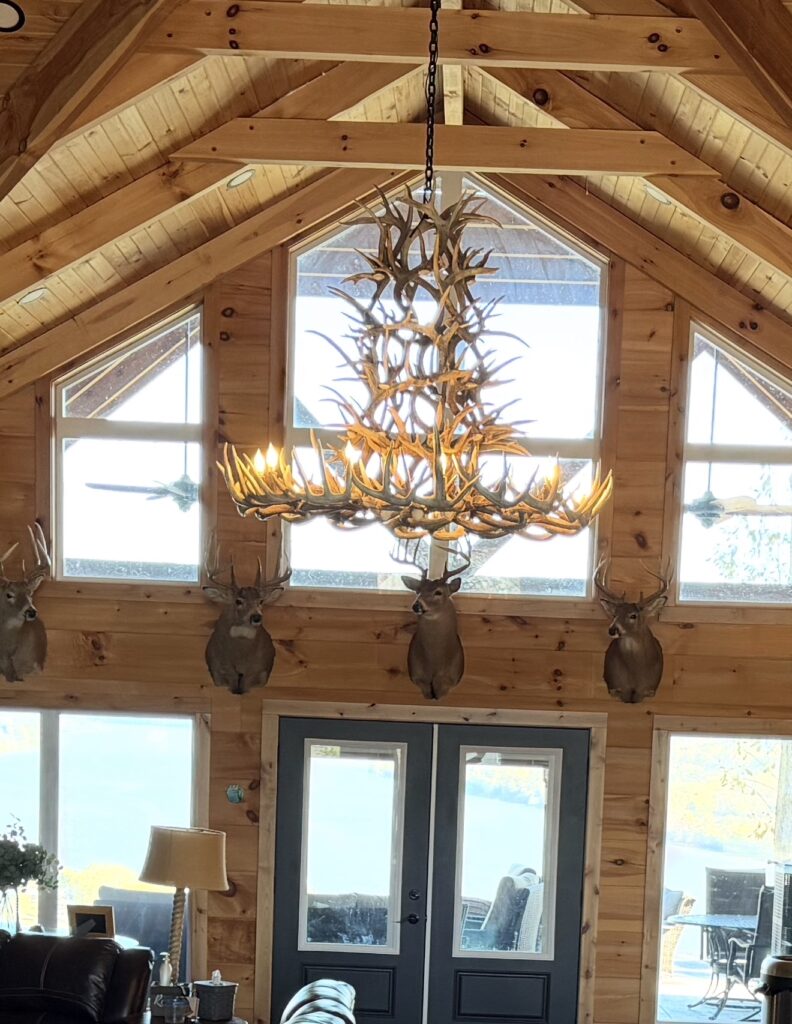
Ask what the maker can share and at what stage. A work-in-progress photo can show the antler layout while there is still time to discuss it. Finished photos from the side and from below can show how the tiers and lights read from different viewpoints.
Explore the workshop and designs
More Guides
Keep reading our antler chandelier guides.

 Most chandeliers: 6–10 week build plus freight. Quick-ship chandeliers, sconces, lamps & accessories: 1–3 weeks.